
24/7 EMERGENCY SERVICE
Mobile Wheel Balancing Professional Service at Your Location
Experiencing vibration through the steering wheel or shaking at certain speeds? Wizz Tyres provides mobile wheel balancing at suitable home, workplace and roadside locations across the UK.
If your car has started vibrating after new tyres were fitted, feels unsettled at motorway speeds, or has developed an unusual vibration through the steering wheel, wheel balance is one of the things worth checking.
A vibration does not automatically mean the wheels need balancing, though. Tyre condition, wheel damage, alignment, suspension components and tyre pressure can also affect how a vehicle feels on the road.
Is Your Car Vibrating at Speed?
A vehicle that feels smooth at one speed but develops noticeable vibration at another can be difficult to diagnose from inside the car.
You may notice:
- Vibration through the steering wheel
- Shaking at motorway speeds
- A noticeable wheel or tyre vibration
- Vibration after fitting new tyres
- Uneven or unusual tyre wear
- A vehicle that no longer feels as smooth as before
- A vibration that changes with road speed
But the symptom alone is not enough to confirm that balancing is required.
A practical example
You have recently had two new tyres fitted. Around town, the car feels normal, but at higher speeds you begin to notice a vibration through the steering wheel.
Because the vibration appeared after tyre work, checking the tyre and wheel assemblies is a sensible starting point. If an imbalance is identified, wheel balancing may correct the issue.
If the balance is within specification, another cause needs to be considered.
That distinction matters. Wizz Tyres does not treat every vibration as a balancing problem.
What Is Wheel Balancing?
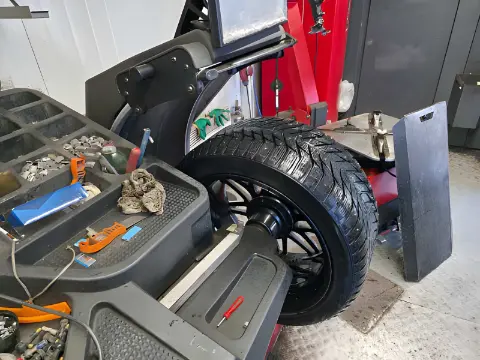
Wheel balancing corrects uneven weight distribution between a tyre and wheel assembly by using appropriate balancing weights. Correct balance helps the wheel and tyre rotate smoothly and can reduce vibration and irregular wear.
A tyre and wheel need to rotate together as smoothly as possible.
Even when a wheel looks perfectly normal, the combined tyre and wheel assembly can have small variations in weight distribution. During rotation, those variations can contribute to vibration.
The basic relationship is:
Wheel + tyre → uneven weight distribution → rotational vibration → balancing adjustment
During balancing, the assembly is assessed and appropriate weights can be added at the required positions to compensate for the imbalance.
Why balancing weights are used
A small amount of additional weight in the correct position can counteract an area of the assembly that is relatively heavier or lighter.
The objective is not to add weight randomly. The amount and position matter.
This is why proper wheel balancing requires suitable balancing equipment and an accurate assessment of the individual wheel and tyre assembly.
What Causes Wheel Imbalance?
Wheel imbalance can develop for several reasons, and it is not necessarily a sign that something has gone seriously wrong with the vehicle.
New Tyre Fitting
Whenever a new tyre is fitted to a wheel, the tyre and wheel become a new combined assembly.
Even if the wheel itself has previously been balanced, the new tyre can alter the weight distribution.
This is why balancing is commonly considered as part of the tyre-fitting process.
Related service: Mobile Tyre Fitting.
Kerb Impact
Contact with a kerb can also affect the wheel or tyre.
A driver may initially notice only a small change in steering feel, vibration or tyre behaviour.
If the impact was significant, the wheel and tyre should be inspected rather than assuming that balancing alone will resolve the issue.
Tyre or Wheel Condition
The condition of the tyre and wheel themselves can influence vibration.
Examples can include:
- Tyre damage
- Irregular tyre wear
- Wheel damage
- An incorrectly seated tyre
- Other tyre or wheel abnormalities
This is why wheel balancing should form part of a wider tyre and wheel assessment when a vibration is reported.
Wheel Weights Coming Loose
Balancing weights are attached to specific areas of the wheel to compensate for measured imbalance.
If a weight becomes loose or detached, the previous balance can change.
A vibration that appears after the vehicle has previously driven smoothly may therefore justify checking the wheel balance.
Pothole Impact
A significant pothole can affect a wheel and tyre assembly.
Depending on the severity of the impact, the result could involve a change in balance, tyre damage or even wheel damage.
This is important because simply balancing a damaged wheel is not necessarily an appropriate solution.
5 Signs Your Wheels May Need Balancing
When something changes without an obvious explanation, a tyre and wheel inspection can help establish what is happening.
How Our Process Works
When something changes without an obvious explanation, a tyre and wheel inspection can help establish what is happening.
01
Steering Wheel Vibration
If vibration can be felt particularly through the steering wheel, the front tyre and wheel assemblies may warrant inspection.
However, steering vibration can have other causes, so this symptom alone does not confirm wheel imbalance.
02
Vehicle Shaking at Certain Speeds
A vibration that becomes noticeable at particular road speeds is commonly associated with rotational issues, including possible wheel imbalance.
The exact speed at which vibration appears can vary according to the vehicle and the underlying cause.
03
Vibration After New Tyres
If vibration starts soon after fitting new tyres, checking the tyre and wheel balance is particularly relevant.
The new tyre changes the combined tyre-and-wheel assembly, which may require balancing.
04
Uneven Tyre Wear
Uneven wear can sometimes accompany tyre or wheel problems, but it can also be associated with alignment, suspension, tyre pressure and other factors.
Uneven wear should therefore be investigated rather than automatically attributed to wheel balance.
05
Unusual Driving Feel
You may simply notice that the vehicle no longer feels as smooth as it previously did.
Perhaps the steering feels different, the car develops a vibration on certain roads, or you feel a repeated movement through the vehicle.
Mobile Wheel Balancing Service
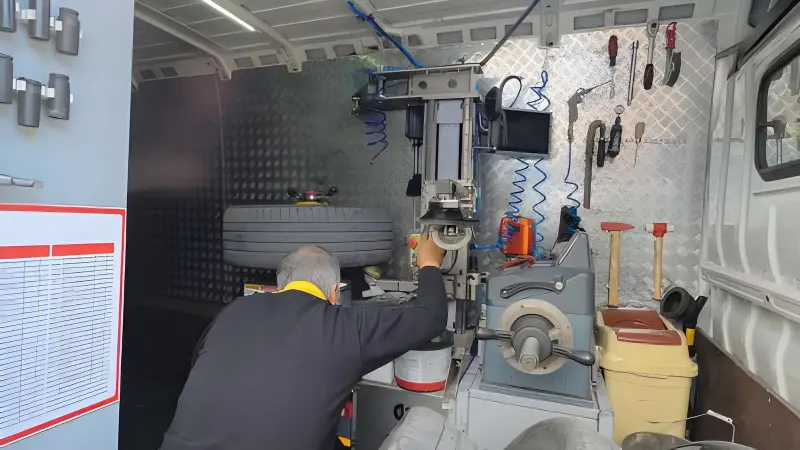
Wizz Tyres provides mobile wheel balancing for suitable vehicles and locations, allowing tyre and wheel assistance to be brought to you rather than requiring a visit to a traditional tyre centre.
The general approach is:
Inspect → assess → balance where appropriate → check → advise
The important part is the phrase “where appropriate.”
If the wheel and tyre assembly shows an imbalance, balancing may be the appropriate solution.
If the technician identifies another concern, such as visible tyre damage or a damaged wheel, simply adding balancing weights may not address the underlying problem.
Practical example
A customer notices vibration after having a tyre replaced.
Wizz Tyres attends the vehicle at a suitable location and assesses the relevant tyre and wheel assembly. If an imbalance is identified, balancing can be carried out as appropriate.
If the assembly appears balanced but the vibration remains, further investigation may be needed.
Wizz Tyres service
Our mobile approach means the initial tyre and wheel assessment can take place where the vehicle is located, subject to safe access and suitable working conditions.
Wheel Balancing vs Wheel Alignment
Wheel balancing and wheel alignment are often confused because both can affect how a vehicle feels and how its tyres wear.
They address different things.
Wheel Balancing
Addresses uneven weight distribution in the tyre and wheel assembly |
Often considered when rotational vibration is present |
Uses balancing weights where required |
Concerned with rotational balance |
Wheel Alignment
Addresses wheel positioning and vehicle alignment geometry |
Often considered when steering, handling or tyre-wear issues suggest alignment problems |
Involves checking and, where possible, adjusting alignment angles |
Concerned with wheel geometry and positioning |
In simple terms
Balancing asks: Is the tyre and wheel assembly rotating evenly?
Alignment asks: Are the vehicle’s wheels positioned according to the required geometry?
A vehicle can require one without requiring the other.
Practical example
If the steering wheel vibrates at a particular road speed after a tyre change, wheel balance may be worth checking.
If the vehicle pulls to one side or the tyres show a particular pattern of uneven wear, alignment may need investigation.
Sometimes both issues can exist, which is why diagnosing the actual symptom is more useful than automatically choosing one service.
Related service: Mobile Wheel Alignment.
Do New Tyres Need Wheel Balancing?
Wheel balancing is commonly relevant when new tyres are fitted because the new tyre changes the combined tyre-and-wheel assembly. The assembly should be checked and balanced as appropriate rather than assuming that a previously balanced wheel will remain perfectly balanced with every new tyre.
Even a high-quality tyre can have small variations in weight distribution when fitted to a wheel.
The purpose of balancing is to compensate for these variations so the finished assembly can rotate smoothly.
Practical example
A customer has two worn tyres replaced. After the fitting, the vehicle develops a vibration that was not previously noticeable.
Checking the balance of the newly assembled tyre and wheel can help determine whether imbalance is contributing to the vibration.
Wizz Tyres service
When mobile tyre fitting is carried out, tyre and wheel balance is an important consideration where applicable.
Related service: Mobile Tyre Fitting.

Wheel Balancing vs Wheel Alignment
It can, if wheel imbalance is the cause of the vibration. However, vibration can have other causes, so an assessment is important.
This is one of the most important points when discussing wheel balancing.
A customer may describe the symptom as “my steering wheel is shaking,” but that description does not identify the cause.
Possible causes can include:
- Wheel imbalance
- Tyre damage
- Wheel damage
- Alignment problems
- Suspension issues
- Steering-component problems
- Incorrect tyre pressure
- Other mechanical or tyre-related conditions
Practical example
A vehicle develops steering vibration at motorway speeds after hitting a large pothole.
If the wheel has suffered damage, balancing alone may not be the correct solution. The wheel and tyre need to be assessed first.
Wizz Tyres service
Wizz Tyres can assess the tyre and wheel situation and advise whether balancing appears appropriate or whether another form of inspection is required.
What Happens During Our Mobile Wheel Balancing Service?
When something changes without an obvious explanation, a tyre and wheel inspection can help establish what is happening.
How Our Process Works
When something changes without an obvious explanation, a tyre and wheel inspection can help establish what is happening.
01
Contact Wizz Tyres
Tell us what you have noticed and where the vehicle is located.
Useful information includes:
- Vehicle make and model
- Your location
- When the vibration occurs
- Whether it happens at a particular speed
- Whether it started after new tyres
- Whether the vehicle recently hit a pothole or kerb
02
Technician Attends a Suitable Location
Where the location provides safe and suitable working conditions, a mobile technician can attend the vehicle. This may be at home, at work or another appropriate location.
03
Tyre and Wheel Assessment
The relevant tyre and wheel assembly is assessed to establish whether balancing is appropriate.
The technician also needs to consider obvious tyre or wheel concerns that could affect the result.
04
Balancing Where Appropriate
If imbalance is identified and the assembly is suitable for balancing, appropriate balancing weights can be applied to correct the measured imbalance.
05
Check the Result
The assembly is checked following the balancing procedure.
The objective is to ensure the balance has been addressed rather than simply adding weights without verification.
06
Further Advice Where Necessary
If the reported vibration remains unexplained, Wizz Tyres can advise that another inspection may be required.
This could involve considering the tyre, wheel, alignment, suspension or steering components depending on the symptoms.
What If Balancing Doesn't Solve the Problem?
If balancing does not resolve the vibration, the vibration may have another cause and should not simply be treated by repeatedly adding balancing weights.
Tyre Damage
A damaged tyre can create vibration or other abnormal driving behaviour.
Wheel Damage
A bent or damaged wheel may not behave correctly even if balancing equipment is used.
Alignment Issue
Incorrect wheel alignment can contribute to handling problems and irregular tyre wear.
Suspension Components
Worn or damaged suspension components can affect how the vehicle behaves and may produce symptoms that a driver initially describes as vibration.
Steering Components
Problems involving steering components can affect steering feel and vehicle behaviour.
Incorrect Tyre Pressure
Incorrect pressure can alter how a tyre behaves and should be checked against the manufacturer's recommended values.
Why this matters
A good wheel-balancing service should not become a search for a balancing solution at all costs.
If the measured balance is satisfactory but the vehicle continues to vibrate, the next step is understanding why.
Wizz Tyres approach
If balancing does not appear to explain the reported symptom, Wizz Tyres can advise that further professional inspection may be appropriate.
Can a Pothole Cause Wheel Imbalance?
Yes, a pothole impact can contribute to a change in wheel balance, but a significant impact can also damage the wheel or tyre. The correct response depends on what the inspection finds.
A pothole can subject the wheel and tyre to a sudden impact.
In a minor case, the main issue may be a change in balance. In a more serious case, the wheel could become damaged or the tyre could suffer structural damage.
Practical example
You hit a deep pothole and immediately notice vibration at higher speeds.
It would be unwise to assume that the solution is simply wheel balancing. The wheel and tyre should first be checked for visible or other relevant damage.
Wizz Tyres service
Wizz Tyres can assess the tyre and wheel condition and advise whether mobile balancing is appropriate.
Mobile Wheel Balancing at Home or Work
Wizz Tyres can provide mobile wheel-balancing assistance at suitable:
- Home locations
- Workplaces
- Driveways
- Other appropriate locations

Wheel balancing at home
If your vehicle has developed vibration while parked at home, mobile wheel balancing can be a convenient option where the location provides adequate working space and safe access.
Wheel balancing at work
A tyre or wheel problem discovered during the working day can sometimes be dealt with while the vehicle remains at the workplace, subject to the site being suitable for the work.
Roadside balancing
Roadside work requires additional consideration. Traffic conditions, visibility, road position and available working space all affect whether a location is suitable.
Can Alloy Wheels Be Balanced?
Yes, alloy wheels can generally be balanced using appropriate wheel-balancing procedures, provided the wheel and tyre assembly is suitable for the work.
Alloy wheels are common on modern passenger vehicles and can be balanced in the same general principle as other wheel types: the tyre and wheel assembly is assessed and appropriate balancing correction is applied.
However, wheel condition matters.
An alloy wheel that has been damaged by a pothole or kerb impact may require inspection beyond a straightforward balance.
Practical example
You notice vibration after hitting a pothole and the vehicle has alloy wheels.
The correct approach is to assess the wheel and tyre rather than assuming that the vibration is simply caused by lost balance.
Wizz Tyres service
Where the wheel and tyre assembly is suitable for mobile balancing, Wizz Tyres can assess and balance it as appropriate.
Real Wheel Balancing Jobs
Customer: Robert Priestley
Vehicle: Audi A4
Location: Rugby
Problem
Robert noticed a vibration through the steering wheel at higher speeds while driving his Audi A4. The issue was becoming more noticeable on longer journeys, so he arranged for the wheels to be checked without taking the car to a tyre centre.
Service
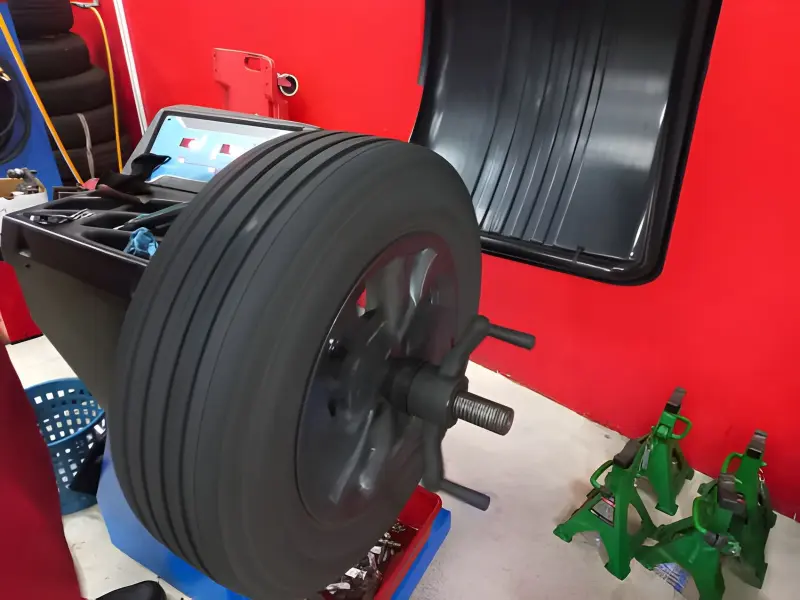
Wizz Tyres provided mobile wheel balancing in Rugby, inspecting the wheels and checking their balance to identify any imbalance that could be contributing to the vibration.
Solution
The affected wheel was rebalanced using the appropriate wheel weights, with the wheel checked again after balancing to ensure the weight distribution was correct.
Outcome
The wheel balancing was completed on-site, helping reduce the vibration and allowing Robert to continue driving without needing to visit a traditional tyre centre.
Mobile Wheel Balancing Across the UK
Wizz Tyres provides mobile wheel balancing across the UK, including Birmingham, Warwickshire and other areas covered by our mobile service.
The mobile service can be suitable for customers who need tyre and wheel assistance at:
For customers in Birmingham and Warwickshire, dedicated location pages can provide more specific information about local mobile tyre and wheel services.
Related areas: Birmingham | Warwickshire | Other active Wizz Tyres locations.
Google reviews









Would highly recommend 👍🏻









Frequently Asked Questions Abou Mobile Wheel Balancing
What is wheel balancing?
Wheel balancing corrects uneven weight distribution between a tyre and wheel assembly using appropriate balancing weights. This helps the assembly rotate more smoothly and can reduce vibration associated with imbalance.
A tyre and wheel are balanced as a combined assembly because their weight distribution affects how they rotate.
Practical example
A driver notices vibration at higher speeds shortly after fitting a new tyre. The tyre and wheel assembly is checked and an imbalance is identified.
Wizz Tyres service
Wizz Tyres can provide mobile wheel-balancing assistance at suitable locations where balancing is identified as the appropriate solution.
Why does my steering wheel vibrate?
Steering-wheel vibration can have several causes, including wheel imbalance, tyre or wheel problems, alignment issues and mechanical components. If the vibration is new or persistent, the vehicle should be assessed rather than assuming that balancing is automatically required.
The circumstances are important.
Vibration that occurs at a particular speed can point towards a rotational issue, while vibration associated with braking, steering input or road impact may require a different investigation.
Practical example
Your steering wheel begins vibrating after hitting a pothole. Because the timing follows an impact, the tyre and wheel should be checked for damage as well as balance.
Wizz Tyres service
We can assess the tyre and wheel situation and advise whether mobile balancing is appropriate.
Do new tyres need balancing?
New tyres commonly require the tyre-and-wheel assembly to be checked for balance after fitting. The new tyre can alter the overall weight distribution of the assembly, even when the wheel was previously balanced.
Balancing is therefore an important consideration during tyre fitting.
Practical example
A new tyre is fitted and the vehicle subsequently develops a vibration at higher speeds.
Wizz Tyres service
Wizz Tyres can consider wheel balance as part of appropriate mobile tyre-fitting or follow-up assistance.
Related service: Mobile Tyre Fitting.
How often should wheels be balanced?
There is no universal mileage interval at which every vehicle must have its wheels balanced. Balancing may be appropriate when new tyres are fitted, after certain wheel or tyre events, when a balancing weight is lost, or when vibration suggests an imbalance.
A vehicle that feels smooth and has no relevant tyre or wheel changes may not require routine balancing simply because a certain number of miles have been driven.
Practical example
A driver has new tyres fitted and notices vibration afterwards. Checking the balance is more relevant than waiting for a predetermined mileage interval.
Wizz Tyres service
Wizz Tyres can assess the reported symptoms and tyre history to determine whether mobile wheel balancing is appropriate.
Can a pothole cause wheel imbalance?
Yes, a pothole can contribute to wheel imbalance, but the impact can also damage the tyre or wheel. If vibration appears after a significant pothole strike, the complete tyre and wheel assembly should be considered.
The correct solution depends on the condition of the components.
Practical example
You hit a pothole and immediately notice a new vibration. Balancing may be relevant, but checking for wheel or tyre damage is equally important.
Wizz Tyres service
Our mobile service can assess the tyre and wheel situation and advise on the appropriate next step.
What's the difference between wheel alignment and balancing?
Wheel balancing addresses uneven weight distribution in a tyre and wheel assembly, while wheel alignment concerns the positioning and geometry of the vehicle’s wheels. They solve different problems.
Balancing is commonly associated with rotational vibration.
Alignment is more closely associated with wheel geometry, steering behaviour and certain patterns of uneven tyre wear.
Practical example
A vibration after new tyres may lead to a balance check, while a vehicle pulling to one side may require alignment investigation.
Wizz Tyres service
Wizz Tyres can help identify whether mobile wheel balancing is appropriate and advise when another service, such as mobile wheel alignment, should be considered.
Can you balance wheels at home?
Yes, mobile wheel balancing can be carried out at a suitable home location where there is adequate working space and safe access for the required equipment.
The mobile format means the customer does not necessarily have to take the vehicle to a traditional tyre centre.
Practical example
Your car is parked on a suitable driveway and has developed vibration after recent tyre work.
Wizz Tyres service
Wizz Tyres can assess whether the location and vehicle are suitable for mobile wheel balancing.
Can you balance alloy wheels?
Yes, alloy wheels can generally be balanced where the wheel and tyre assembly is suitable for the service. The wheel should also be checked for damage if vibration has followed a pothole or kerb impact.
Balancing corrects weight distribution; it does not repair a structurally damaged wheel.
Practical example
An alloy wheel develops vibration after a severe pothole impact. The wheel needs to be assessed rather than assuming that balancing weights will solve the problem.
Wizz Tyres service
We can assess the wheel and tyre condition and advise whether mobile balancing is appropriate.
Can wheel balancing fix vibration at motorway speeds?
Wheel balancing can reduce or remove vibration at motorway speeds when wheel imbalance is the underlying cause. If the vibration comes from tyre damage, wheel damage, alignment, suspension or another issue, balancing alone may not resolve it.
The speed at which vibration occurs can provide useful diagnostic information, but it does not identify the cause by itself.
Practical example
A vehicle is smooth around town but develops a repeated vibration at higher speeds after new tyres were fitted. Checking the tyre and wheel balance is a sensible step.
Wizz Tyres service
Wizz Tyres can assess the tyre and wheel assembly and advise whether mobile balancing is suitable.
How much does mobile wheel balancing cost?
The cost of mobile wheel balancing depends on factors such as the vehicle, number of wheels involved, location, tyre and wheel requirements and the work required. There is no single price that accurately applies to every mobile balancing job.
A straightforward balancing job may differ from a call involving additional tyre or wheel assessment.
Practical example
A customer requiring balancing on one wheel has a different requirement from someone needing several wheel assemblies checked following new tyre fitting.
Wizz Tyres service
Contact Wizz Tyres with your location, vehicle details and symptoms so the required service can be assessed and the applicable price explained.
Your Wheels Don't Feel Right? Let Wizz Tyres Check Them
A steering-wheel vibration, shaking at higher speeds or a change in how your vehicle feels should not simply be ignored.
Mobile wheel balancing can correct vibration when wheel imbalance is the cause, but identifying the actual cause is the important first step.
Wizz Tyres provides mobile wheel-balancing assistance at suitable home, workplace and roadside locations across the UK.
Tell us:
Where the vehicle is + what you’re experiencing + when the vibration occurs
and we’ll advise on the appropriate tyre and wheel service.