
24/7 EMERGENCY SERVICE
Mobile TPMS service Diagnosis & Sensor Replacement
Is your TPMS warning light staying on, or is your vehicle showing an incorrect tyre-pressure reading?
Wizz Tyres provides mobile TPMS diagnosis, sensor-related services and TPMS sensor replacement where appropriate, with mobile assistance available at suitable home, workplace and roadside locations across the UK.
A tyre pressure warning does not always mean that the sensor itself has failed. Low tyre pressure, a damaged sensor, a sensor battery problem or an issue following tyre or wheel work can all produce warning messages.
If your vehicle is showing a TPMS fault, tell Wizz Tyres what the vehicle is reporting and where the vehicle is located. We can assess the situation and advise on the appropriate service.
What Is TPMS?
TPMS stands for Tyre Pressure Monitoring System. It is a vehicle system designed to monitor tyre pressure and alert the driver when pressure falls outside the vehicle’s specified range. Depending on the vehicle, TPMS may use direct pressure sensors or an indirect system that detects changes associated with tyre rotation.
The purpose of TPMS is straightforward: give the driver an early indication that tyre pressure may need attention.
However, the technology differs between vehicles.
Direct TPMS
A direct TPMS uses sensors associated with the individual wheels or tyre valves to measure tyre pressure. The information is transmitted to the vehicle’s monitoring system, allowing the driver to receive a pressure-related warning or reading.
If a direct sensor develops a fault, is damaged or reaches the end of its service life, the vehicle may display a TPMS warning or fail to show the expected pressure information.
Indirect TPMS
An indirect TPMS does not normally measure tyre pressure directly at each wheel. Instead, the vehicle can use information from systems such as the wheel-speed sensors to identify changes in wheel rotation that may be associated with differences in tyre pressure.
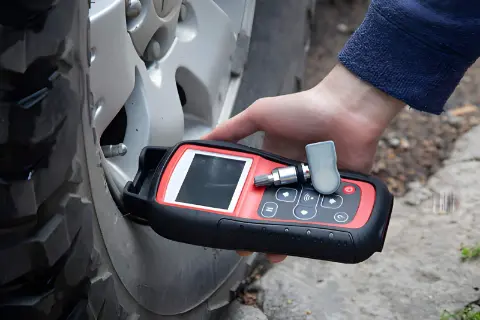
TPMS Warning Light? Here's What It Can Mean
A TPMS warning light is an indication that something needs attention, but it should not automatically be assumed to mean that the TPMS sensor is faulty.
Possible causes include:
- Low tyre pressure
- Incorrect tyre pressure
- TPMS sensor fault
- Damaged sensor
- Sensor battery issue
- A problem following tyre or wheel work
- TPMS system-related fault
- A required reset, relearn or calibration procedure on some vehicles
The first step should be checking the tyre pressures against the vehicle manufacturer’s recommended pressure values.
A practical example
You have recently had a tyre changed and, shortly afterwards, the TPMS warning appears.
It would be premature to conclude that the new sensor has failed. The tyre pressure itself may need checking, or the vehicle may require a TPMS-related reset or relearning procedure depending on its system.
Wizz Tyres service
Wizz Tyres can assess the reported TPMS symptom and determine what type of tyre or sensor-related assistance may be appropriate.
Common TPMS Problems We Help With
TPMS Warning Lighte
A warning light may appear because the vehicle has detected low pressure or a TPMS-related problem.
If the warning remains after correcting the tyre pressure, further assessment may be appropriate.
Faulty TPMS Sensor
A sensor can eventually develop a fault or stop communicating correctly with the vehicle.
The appropriate replacement depends on the vehicle and TPMS system.
Damaged TPMS Sensor
TPMS components can be exposed to damage during tyre and wheel work. A damaged component may result in inaccurate readings or a warning on the dashboard.
This is one reason TPMS components need appropriate care when tyres are being removed or fitted.
TPMS Sensor Replacement
Where the sensor is confirmed or reasonably identified as requiring replacement, a compatible replacement sensor may be required.
Sensor compatibility matters because TPMS sensors are not universally interchangeable between every vehicle.
Incorrect Pressure Reading
A pressure displayed by the vehicle may not match what you expect.
Before assuming a sensor has failed, the actual tyre pressure should be checked using an appropriate pressure gauge and compared with the vehicle manufacturer's recommended values.
TPMS Issue After Tyre Fitting
If the warning appears after a tyre has been replaced, the TPMS system should be considered as part of the tyre fitting process.
The cause may be pressure-related, sensor-related or associated with the vehicle's required TPMS procedure.
Mobile TPMS Diagnosis
A useful TPMS diagnosis starts with the symptom rather than immediately replacing a component.
The general process is:
Check → identify the likely issue → advise → repair or replace where appropriate → verify
When contacting Wizz Tyres, tell us:
- What warning is showing
- Whether a pressure reading is missing or incorrect
- Which tyre appears to have a problem
- Whether the issue started after tyre or wheel work
- Your vehicle make and model
- Where the vehicle is located
What happens during assessment?
The technician considers the reported symptom alongside the vehicle and tyre situation. Where supported by the vehicle and available diagnostic equipment, TPMS-related information can be checked to help identify the source of the problem.
A sensor should not simply be replaced because a warning light has appeared. The objective is to identify the likely cause before deciding what action is appropriate.
Wizz Tyres approach
Our mobile service is designed around the actual vehicle and tyre problem. Where TPMS repair or replacement is appropriate, we can advise on the available solution.
TPMS Sensor Replacement
A TPMS sensor replacement may be necessary when a sensor has failed, become damaged or can no longer operate correctly.
However, replacing a sensor is not simply a matter of fitting any sensor that physically fits the wheel.
The replacement needs to be appropriate for the vehicle’s TPMS system.
Important considerations include:
- Vehicle make and model
- TPMS system type
- Sensor compatibility
- Valve and sensor configuration
- Sensor condition
- Communication with the vehicle
- Programming or relearning requirements, where applicable
Sensor damage
During tyre removal and fitting, care needs to be taken around TPMS components because some systems use sensors incorporated into the valve assembly.
If a component is damaged, the correct response depends on the vehicle and the component involved.
Programming and relearning
Some vehicles may require a new TPMS sensor to be programmed, paired or relearned by the vehicle after installation.
The exact procedure varies between manufacturers and models.
TPMS After New Tyres
A new tyre and a TPMS system often become part of the same job because the sensor is associated with the wheel and tyre assembly.
When a tyre is removed, the TPMS component needs to be considered during the fitting process.
After fitting a new tyre, a driver may notice:
- A TPMS warning
- Missing pressure information
- An incorrect pressure reading
- A warning that does not clear after the tyre pressure has been corrected
That does not necessarily mean the new tyre is defective or that the sensor has failed.
The vehicle may need its pressures checked, or a TPMS reset, calibration, relearning or sensor-related procedure depending on the vehicle.
Practical example
A driver has one worn tyre replaced. After leaving the fitting location, the TPMS warning remains on.
The first step is not automatically replacing the sensor. The tyre pressure and vehicle-specific TPMS requirements should be checked to establish why the warning remains.
Wizz Tyres service
Because Wizz Tyres provides both mobile tyre fitting and TPMS-related assistance, the tyre and monitoring-system aspects can be considered together where appropriate.
Related service: Mobile Tyre Fitting.
Can I Drive With the TPMS Warning Light On?
Do not ignore a TPMS warning light. Check the tyre pressures against the vehicle manufacturer’s recommended values and inspect the tyres for obvious damage. If the warning remains, the tyre appears damaged or the vehicle is behaving abnormally, arrange appropriate professional assessment rather than continuing to drive unnecessarily.
A TPMS warning can indicate genuinely low tyre pressure. Driving with incorrect pressure can affect tyre performance, handling and wear.
It can also indicate a TPMS system problem rather than low pressure itself.
Practical example
Your dashboard displays a tyre-pressure warning shortly after starting the car. You stop somewhere safe and check the tyres. One tyre is significantly below the recommended pressure.
That should not be treated simply as a sensor problem. The tyre needs attention, and the cause of the pressure loss should be considered.
Wizz Tyres service
Wizz Tyres can provide mobile tyre assistance and assess whether the issue appears to require tyre-related or TPMS-related attention.
TPMS vs Checking Tyre Pressure Manually
TPMS is a monitoring and warning system. It should not replace sensible manual tyre checks.
A TPMS system can alert you when the vehicle detects a pressure-related issue, but drivers should still check tyre pressures according to the vehicle manufacturer’s recommendations.
Manual checks are particularly useful when:
- Preparing for a long journey
- Carrying additional load
- The vehicle has been unused for some time
- A tyre appears softer than normal
- You suspect a slow puncture
- A TPMS warning has appeared
Why both matter
Think of TPMS as an additional monitoring layer rather than a replacement for basic tyre care.
For example, if you visually notice that a tyre looks low, you should not wait for the dashboard warning before checking it.
Likewise, if the TPMS warning appears, correcting the tyre pressure may resolve a low-pressure situation, but a recurring warning can indicate an underlying issue that needs further investigation.
Our Mobile TPMS Service Process

Contact Wizz Tyres
Call us and explain what your vehicle is showing.

Tell Us the Warning or Symptom
Let us know whether you have a TPMS warning light, missing pressure reading, suspected sensor fault or an issue following tyre fitting.

TPMS and Vehicle Assessment
The reported problem is assessed alongside the vehicle and tyre requirements, using appropriate checks and diagnostic equipment where supported.

Repair, Replacement or Advice
If a sensor replacement or other appropriate service is required, Wizz Tyres can advise on the available solution.

Verify the Result
Where applicable, the system and tyre-related information are checked after the work to ensure the appropriate procedure has been completed.
TPMS Services for Cars, Vans & EVs
Wizz Tyres provides mobile tyre and TPMS-related assistance for suitable cars, vans and electric vehicles (EVs).
However, TPMS requirements can vary considerably between vehicles.
A vehicle may use:
- Direct TPMS
- Indirect TPMS
- Different sensor designs
- Different communication systems
- Vehicle-specific reset procedures
- Programming or relearning procedures
An electric vehicle may also have different tyre specifications from a conventional petrol or diesel vehicle, making it important to identify the vehicle correctly before selecting a replacement tyre or TPMS component.
Practical example
Two vehicles can use tyres of a similar physical size while having different TPMS requirements.
For that reason, Wizz Tyres needs the vehicle details before confirming the appropriate sensor or service.
TPMS and Mobile Tyre Fitting Work Together
TPMS is closely connected to tyre fitting, but the two services should not be treated as identical.
Mobile tyre fitting concerns the removal and fitting of tyres at a suitable mobile location.
TPMS repair and diagnosis concerns the vehicle’s tyre-pressure monitoring system and its associated components.
They can overlap during the same job.
For example, a customer may call Wizz Tyres because a tyre has been damaged. During the replacement process, the TPMS sensor also needs to be considered.
This is why technicians need to work carefully around TPMS components when removing and fitting tyres.
What Information Should I Give Wizz Tyres?
When requesting mobile TPMS assistance, useful information includes:
Vehicle: Make, model and registration if available.
Location: Home, workplace or suitable roadside location.
Warning: What appears on the dashboard.
Tyre: Which tyre appears affected, if known.
Pressure: Whether you have checked the tyre pressure.
Recent work: Whether the tyre or wheel was recently changed, repaired or removed.
Sensor: Whether you already know that a TPMS sensor has been diagnosed as faulty.
The more accurate the information provided at the beginning, the easier it is to understand what type of mobile assistance may be appropriate.
Real TPMS Jobs
Wizz Tyres Job: Mary Mccaughey
Customer: Mary Mccaughey
Vehicle: Ford Focus
Location: Birmingham
Problem
Mary’s Ford Focus displayed a TPMS warning light, indicating a possible issue with the tyre pressure monitoring system. She needed the system checked to identify the cause and make sure the tyre pressures were being monitored correctly.
Service
Wizz Tyres provided a mobile TPMS service in Birmingham, checking the vehicle’s tyre pressures and inspecting the TPMS system and sensors to identify the issue.
Solution
The TPMS system was checked and the necessary sensor-related service and system reset were carried out on-site. The tyre pressures were also checked to ensure they were correctly set.
Outcome
The TPMS warning was addressed and the system was checked to ensure it was functioning correctly, allowing Mary to continue driving with greater confidence that her tyre pressure monitoring system was working properly.
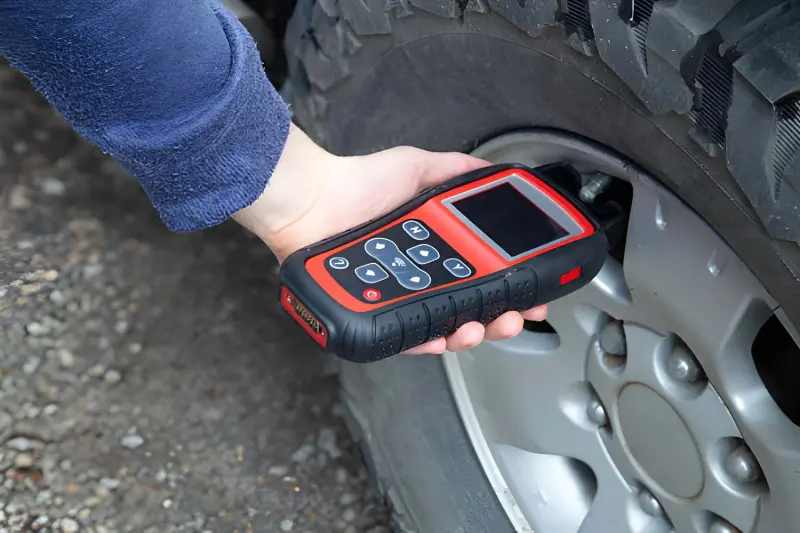
Mobile TPMS Services Across the UK
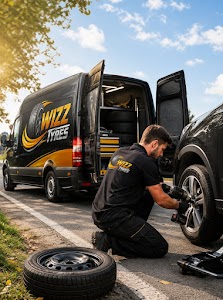
Wizz Tyres provides mobile TPMS services across the UK, including Birmingham, Warwickshire and other areas covered by its mobile technicians.
Mobile assistance is available at suitable:
Every mobile tyre replacement booking with Wizz Tyres includes:
- Homes
- Workplaces
- Driveways
- Suitable roadside locations
Roadside TPMS work depends on safe access and working conditions. A location beside fast-moving traffic or somewhere without adequate working space may not be suitable for a technician to carry out the work.
For this reason, tell Wizz Tyres exactly where the vehicle is and describe the circumstances when you call.
Google reviews








Would highly recommend 👍🏻









Frequently Asked Questions Abou Mobile Wheel Balancing
What does TPMS stand for?
TPMS stands for Tyre Pressure Monitoring System. It is a vehicle system that monitors tyre pressure and provides a warning when pressure is detected outside the vehicle’s specified range or when the system identifies a related issue.
The technology varies by vehicle. Some vehicles use direct pressure sensors, while others use an indirect system.
Practical example
Your dashboard displays a tyre-pressure warning while driving. The warning indicates that the tyre-pressure monitoring system has detected something requiring attention, but it does not automatically prove that a sensor has failed.
Wizz Tyres service
Wizz Tyres can assess tyre and TPMS-related symptoms through its mobile service where appropriate.
What does the TPMS warning light mean?
A TPMS warning light can indicate low tyre pressure, an incorrect pressure reading or a fault involving the tyre-pressure monitoring system. The warning should not automatically be interpreted as a failed sensor.
Start by checking the tyre pressures against the vehicle manufacturer’s recommended values.
If the warning remains after the pressures have been correctly adjusted, further assessment may be required.
Practical example
You inflate a low tyre to the manufacturer’s recommended pressure, but the TPMS warning remains. That could require a further TPMS-related check depending on the vehicle.
Wizz Tyres service
We can assess the reported symptom and advise whether mobile TPMS assistance is appropriate.
Can you replace a TPMS sensor?
Yes, Wizz Tyres provides TPMS sensor replacement where the vehicle and sensor requirements are suitable for the mobile service.
The replacement sensor must be compatible with the vehicle’s TPMS system. Some vehicles may also require programming, pairing or a relearning procedure after installation.
Practical example
A sensor has been diagnosed as faulty and is no longer providing the expected information to the vehicle.
Wizz Tyres service
Provide your vehicle details when contacting us so the appropriate sensor requirement can be established.
How do I know if my TPMS sensor is faulty?
A TPMS warning alone does not prove that the sensor is faulty. Low tyre pressure, sensor damage, battery-related issues, system faults and other conditions can produce similar symptoms.
Checking the actual tyre pressures is an important first step.
If the pressures are correct but the warning persists, the vehicle’s TPMS system may need further assessment.
Practical example
All four tyres are correctly inflated, but the vehicle continues to report a TPMS problem. Further investigation may be needed to determine whether the issue involves a sensor or another part of the system.
Wizz Tyres service
Wizz Tyres can assess the symptom and advise on the appropriate TPMS service.
Can a TPMS sensor be replaced when changing tyres?
Yes. A TPMS sensor can be replaced during tyre fitting when the sensor requires replacement and the correct compatible component is available.
Care is important because some TPMS sensors are integrated with the valve assembly and can be affected during tyre removal or fitting.
Practical example
A tyre has reached the end of its usable life and the associated TPMS sensor is also found to require replacement.
Wizz Tyres service
The tyre fitting and TPMS requirements can be considered together during a suitable mobile appointment.
Related service: Mobile Tyre Fitting.
Can you provide mobile TPMS services?
Yes. Wizz Tyres provides mobile TPMS diagnosis, sensor-related assistance and replacement where appropriate at suitable home, workplace and roadside locations across the UK.
Mobile service means the technician comes to the vehicle instead of requiring the customer to take it to a traditional tyre centre.
Practical example
Your vehicle is parked outside your workplace and the TPMS warning has remained on after a tyre change.
Wizz Tyres service
Contact us with the vehicle details, warning symptoms and location so we can advise on the appropriate mobile service.
Does every vehicle use the same TPMS system?
No. TPMS technology and procedures vary between vehicles. Some use direct pressure sensors, while others use indirect monitoring methods, and sensor programming or relearning requirements can also differ.
This is why vehicle identification is important before confirming a TPMS sensor or procedure.
Practical example
A sensor that is suitable for one vehicle may not be suitable for another, even if the wheels appear similar.
Wizz Tyres service
We use the vehicle information to establish the relevant TPMS requirement before advising on a replacement or service.
Can I drive with the TPMS warning light on?
Do not ignore a TPMS warning. Check the tyre pressures and inspect the tyres for visible damage. If a tyre is flat, damaged or behaving abnormally, avoid unnecessary driving and arrange appropriate assistance.
A warning can indicate low tyre pressure rather than a sensor fault, so the actual tyre condition matters.
Practical example
A tyre appears visibly low while the dashboard displays a pressure warning. Driving to a distant garage may not be appropriate if the tyre is unsafe.
Wizz Tyres service
Wizz Tyres can provide mobile tyre or TPMS assistance at a suitable location.
Does TPMS monitor tyre pressure automatically?
Yes, TPMS is designed to monitor tyre-pressure information and alert the driver when the system detects a pressure-related condition or fault.
The exact method depends on the vehicle. Direct systems measure pressure using sensors, while indirect systems infer pressure changes through other vehicle information.
TPMS is useful, but it does not remove the need for sensible manual tyre-pressure checks.
Practical example
A driver checks tyre pressures before a long journey even though no TPMS warning is showing.
Wizz Tyres service
If your TPMS warning appears or your tyre-pressure readings seem incorrect, Wizz Tyres can assess the tyre and TPMS-related issue where suitable.
Wheel balancing can reduce or remove vibration at motorway speeds when wheel imbalance is the underlying cause. If the vibration comes from tyre damage, wheel damage, alignment, suspension or another issue, balancing alone may not resolve it.
The speed at which vibration occurs can provide useful diagnostic information, but it does not identify the cause by itself.
Practical example
A vehicle is smooth around town but develops a repeated vibration at higher speeds after new tyres were fitted. Checking the tyre and wheel balance is a sensible step.
Wizz Tyres service
Wizz Tyres can assess the tyre and wheel assembly and advise whether mobile balancing is suitable.
How much does TPMS sensor replacement cost?
The cost of TPMS sensor replacement varies because it depends on the vehicle, compatible sensor, number of sensors involved, fitting requirements and whether programming or relearning is required.
There is no sensible single price that applies to every vehicle.
Practical example
Replacing one sensor on one vehicle may involve a different component and procedure from replacing sensors on another vehicle.
Wizz Tyres service
Provide your vehicle details and TPMS symptoms when contacting Wizz Tyres so the required service can be assessed before work is arranged.
Need Help With a TPMS Warning?
A TPMS warning can be caused by something as straightforward as low tyre pressure, but it can also indicate a sensor or system-related problem.
Wizz Tyres provides mobile TPMS diagnosis, sensor-related services and replacement where appropriate, with mobile assistance available at suitable home, workplace and roadside locations across the UK.