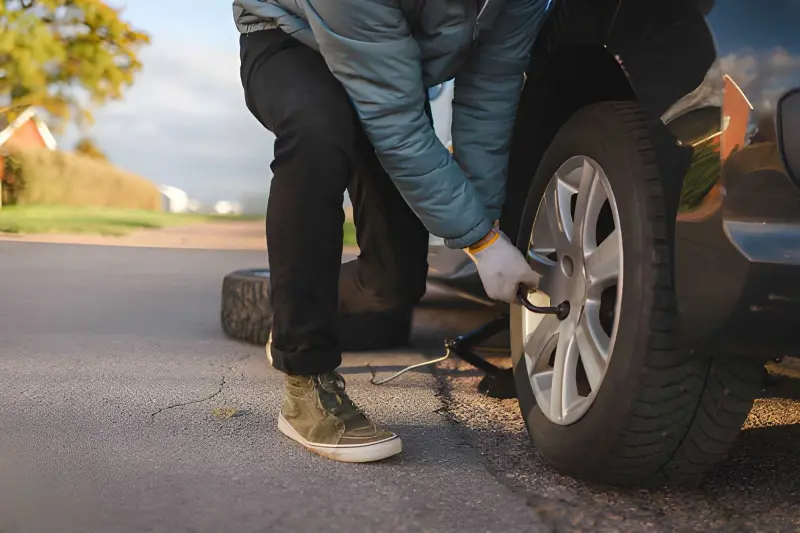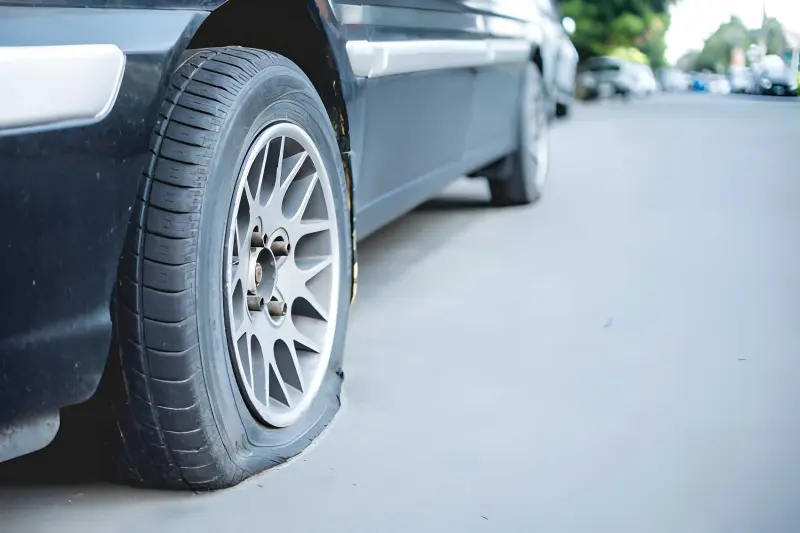
A punctured tyre can usually be repaired if the damage is a small, straight puncture no larger than 6mm, sits within the central three-quarters of the tread, and the tyre hasn’t been driven on while flat. If the puncture is in the sidewall, near the shoulder, larger than 6mm, or the tyre shows signs of internal damage, it needs replacing rather than repairing. As a rule of thumb: if you can point to a single, clean nail hole in the middle of the tread and you caught it early, there’s a good chance it’s repairable.
That said, “repairable” isn’t a guess you should make from the driveway. Below, we’ve broken down exactly how a puncture is assessed, what makes it safe (or unsafe) to repair, what it typically costs, and when replacement is the only responsible option.
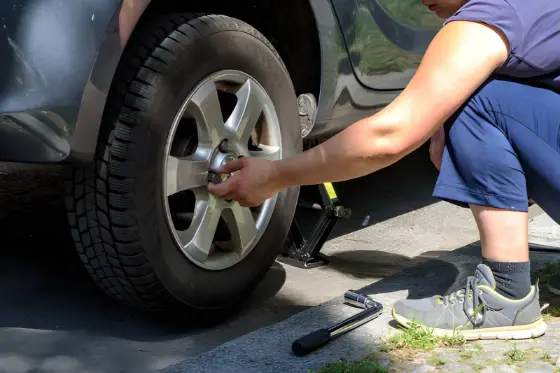
How a Puncture Is Actually Assessed
Every legitimate repair starts the same way: the tyre comes off the wheel and is inspected from the inside, not just the outside. This matters because a puncture can look tiny on the tread but hide bigger problems underneath — a stone chip, a split in the casing, or heat damage from being driven on flat.
A proper assessment checks:
- Location of the damage — tread area, shoulder, or sidewall
- Size of the puncture — measured, not estimated by eye
- Direction of the object — straight-in punctures repair more predictably than angled ones
- Internal casing condition — checked from inside the tyre once it’s off the rim
- Tread depth and overall tyre age — a tyre near the legal limit may not be worth repairing even if the puncture itself is fixable
- Whether it was driven on flat — this alone can rule out a repair, even for a small hole
Anyone offering to plug a puncture without removing the tyre from the wheel is skipping the one step that actually confirms whether a repair is safe. It’s a common shortcut, and it’s the single biggest client mistake we see people make when trying to save time on the roadside.
The Rules That Determine Repairable vs Not
Location on the Tyre
- Central tread area (repairable, in most cases): Punctures within the middle 75% of the tread width are the best candidates for repair, because this is where the tyre’s structure is strongest and most consistent.
- Shoulder area (rarely repairable): The shoulder flexes constantly as the tyre rolls, and a repair here is far more likely to fail under load.
- Sidewall (never repairable): Sidewall damage — including punctures, cuts, or bulges — always means replacement. The sidewall has no reinforcing steel belt like the tread does, so a plug or patch simply cannot hold safely at motorway speeds.
Size of the Puncture
Most industry guidance sets the repairable limit at 6mm in diameter. Anything larger compromises too much of the tyre’s internal structure to seal reliably.
- Up to 6mm: usually repairable, subject to the other checks above
- Over 6mm: replacement required
- Multiple punctures close together: usually replacement, even if each hole is individually small
Condition Before the Puncture
A five-year-old tyre with worn tread and visible cracking isn’t a good repair candidate even if the puncture itself ticks every box. We regularly see this in the Midlands, particularly on tyres that have gone a winter or two past when they should have been changed — the tread might just scrape past the legal 1.6mm limit, but the rubber has already hardened and lost grip. Repairing a tyre in that condition just delays a replacement that was already overdue.
When a Punctured Tyre Needs Replacing
To put it plainly, replacement is the safer (and often the only legal) option when:
- The puncture is in the sidewall or shoulder
- The hole is larger than 6mm
- The tyre was driven any distance while completely flat or significantly under-inflated
- There’s visible bulging, cracking, or cord showing
- The tyre has been punctured and repaired previously in a nearby spot
- Tread depth is close to or below the legal minimum
- There are multiple punctures
Driving on a tyre that’s been “repaired” incorrectly — or one that should never have been repaired in the first place — is a genuine safety risk. A failed repair at speed on the A45 or M6 doesn’t give much warning before it lets go.
What a Proper Repair Involves
A repair done to the correct standard (in the UK, that means a combination plug-and-patch fitted from inside the tyre — not just a rubber plug pushed in from outside) involves:
- Removing the tyre fully from the wheel
- Inspecting the inside of the casing for hidden damage
- Cleaning and buffing the area around the puncture
- Applying a vulcanising patch bonded with a plug through the injury channel
- Re-balancing the wheel once refitted
- A final pressure and seal check
External-only plugs are a temporary fix at best. They’re not something we’d stand behind as a permanent repair, and most manufacturers and tyre safety bodies agree — it’s not just our opinion, it reflects long-standing UK tyre industry practice.
Cost of Tyre Puncture Repair
Pricing depends on the tyre size, whether you need us to come to a home, workplace, or roadside location, and how accessible the vehicle is. As a general guide:
| Service | Typical Price Range |
| Standard puncture repair (car tyre) | £25–£45 |
| Puncture repair on larger/SUV tyres | £35–£55 |
| Mobile call-out (home or workplace) | Often included, or a modest fixed fee |
| Puncture found unrepairable → new tyre fitted | Cost of tyre + fitting, quoted before work begins |
If a puncture turns out to be unrepairable once the tyre’s off the wheel, a good mobile fitter will always tell you before doing anything further — never fit a replacement and then hand you a bill you weren’t expecting.
Prevention Tips: Reducing Your Puncture Risk
- Check tyre pressure monthly — under-inflated tyres are far more prone to sidewall damage and are harder to repair if punctured
- Inspect tread regularly for embedded stones, screws, or nails before they work their way in further
- Avoid pothole-heavy back roads at speed, especially after wet weather when potholes are harder to spot
- Don’t ignore a slow puncture — the longer a tyre runs low, the more likely the eventual damage is unrepairable
- Rotate tyres as recommended to keep wear even, which keeps tread depth in the repairable range for longer
- Have tyres checked seasonally, particularly heading into winter when road surfaces and debris conditions change
When to Call a Professional in Warwickshire, Birmingham & Worcestershire
Call a professional as soon as you notice a puncture, rather than waiting to see if it “holds.” Local roads across Warwickshire and Worcestershire — from rural B-roads near Stratford-upon-Avon to the busier stretches around the A46 and A452 — see a steady mix of loose stone chippings, roadworks debris, and pothole damage, all of which cause the kind of punctures that are time-sensitive to assess.
Get it looked at straight away if:
- You hear a hissing sound or notice the car pulling to one side
- The tyre pressure warning light comes on
- You can see an object embedded in the tread
- You’ve already driven any distance on a tyre that felt soft
- The puncture is anywhere near the shoulder or sidewall
A mobile fitter can assess and repair (or replace) on-site at home, at work, or at the roadside — useful whether you’re in Birmingham city centre, Leamington Spa, Redditch, or a village outside Rugby where the nearest garage isn’t exactly around the corner.
Areas We Cover
Alongside the core coverage across Birmingham, Warwickshire, and Worcestershire, mobile puncture repair is available throughout the surrounding towns and suburbs, including:
- Warwickshire: Warwick, Leamington Spa, Rugby, Stratford-upon-Avon, Nuneaton, Bedworth, Kenilworth
- Birmingham & suburbs: Solihull, Sutton Coldfield, Edgbaston, Erdington, Kings Heath, Moseley
- Worcestershire: Redditch, Bromsgrove, Kidderminster, Droitwich Spa, Worcester, Malvern
- Staffordshire border areas: Tamworth, Lichfield
If your postcode falls close to any of these, help is generally reachable within a short window — usually 10–30 minutes depending on location and time of day.
Why Choose Us for Puncture Repair
- Technicians inspect the tyre off the wheel every time — never a quick outside-only plug
- Straightforward, upfront pricing before any repair or replacement work begins
- Mobile service that comes to your home, workplace, or roadside location
- Certified and insured fitters with experience across a wide range of tyre brands and vehicle types
- Fast turnaround, typically arriving within 10–30 minutes across the covered area
- Honest advice — if a tyre isn’t safe to repair, you’ll be told plainly, with options, not upsold
Ready to Get It Checked?
If you’ve spotted a puncture or your tyre pressure warning has come on, don’t wait to find out whether it’s repairable — a quick on-site assessment settles it either way, safely and without guesswork. Book a mobile puncture repair and get back on the road with confidence.
Local FAQs
Can a punctured tyre always be repaired? No — only punctures that are small, within the central tread area, and haven’t been driven on while flat can be safely repaired.
What size puncture can be repaired in a tyre? Punctures up to around 6mm in diameter can typically be repaired, provided they’re in the correct location.
Can a sidewall puncture be repaired? No — sidewall damage always requires tyre replacement, as there’s no safe way to reinforce that part of the tyre.
How much does a puncture repair cost? Most standard car tyre puncture repairs cost between £25 and £45, depending on tyre size and location.
Is it safe to drive on a tyre with a slow puncture? It’s not recommended — a slow puncture should be checked as soon as possible, as continued driving increases the chance the tyre becomes unrepairable.