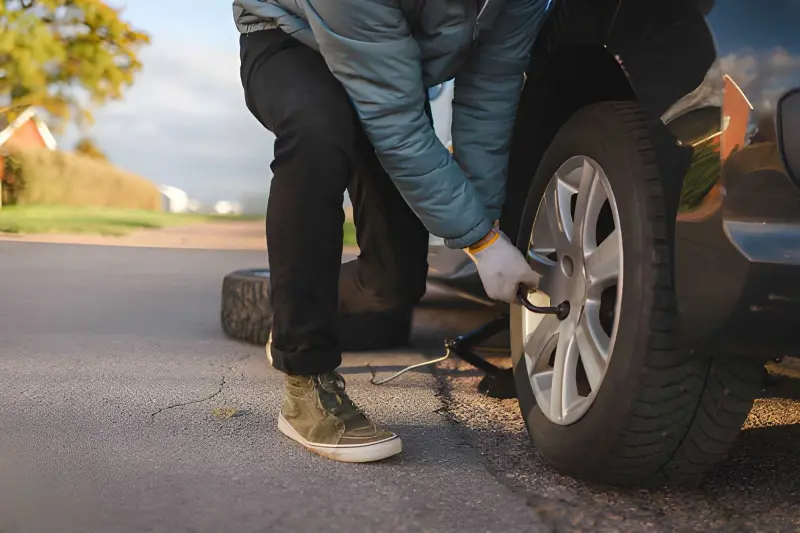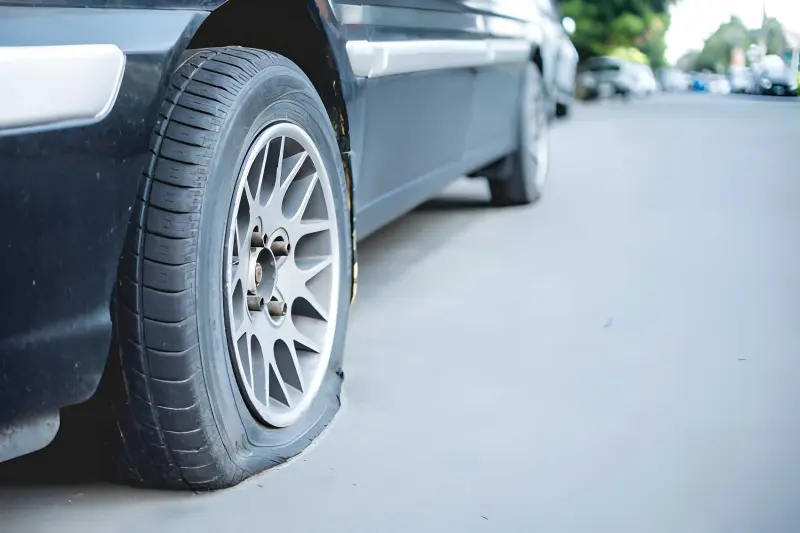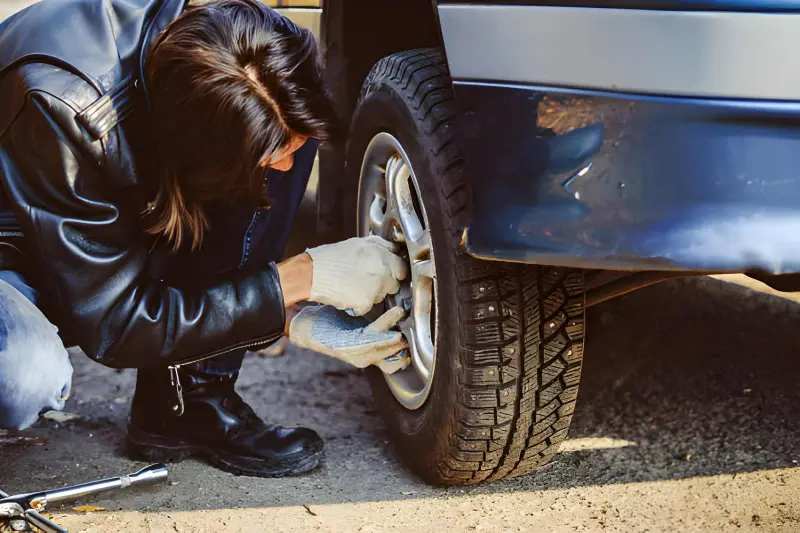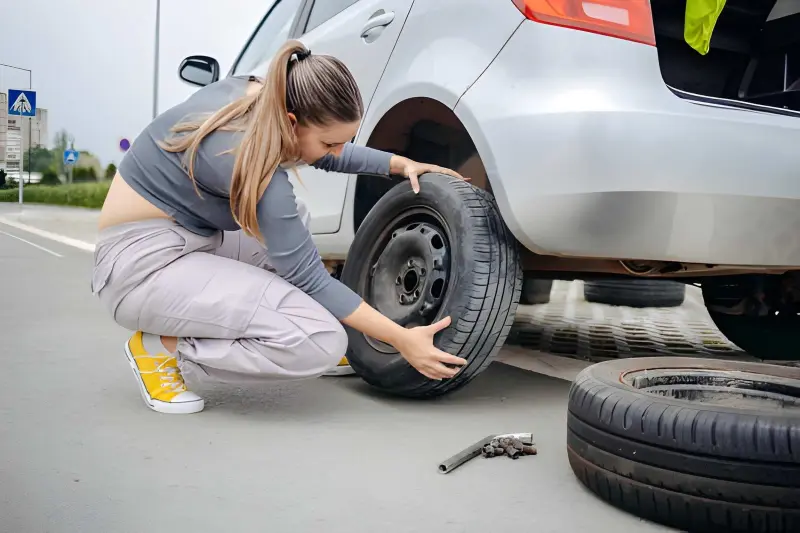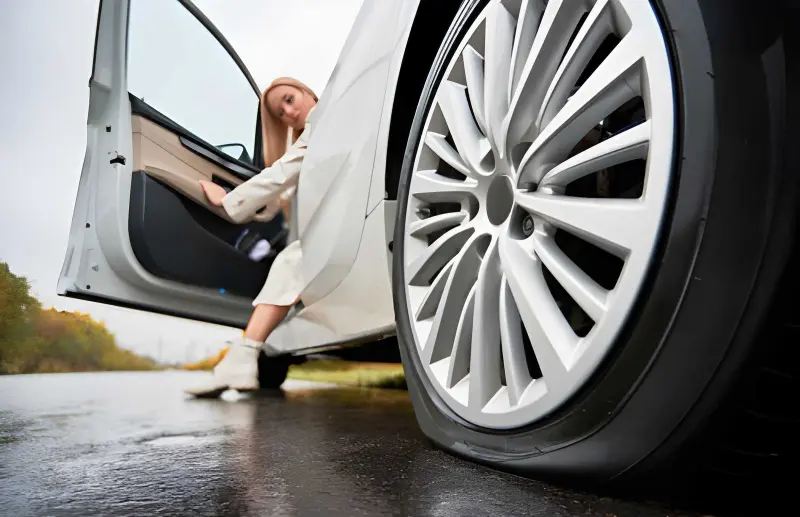
A tyre blowout is a sudden, complete loss of air pressure that can happen in less than a second, and it can make a car pull hard to one side. If it happens to you, the immediate priority is to keep both hands firmly on the wheel, avoid braking hard, and ease off the accelerator gradually until you can pull onto a safe, flat area away from moving traffic. Once you’re stopped safely, the tyre itself is the easy part to fix — staying calm and getting off the carriageway safely is what actually keeps you out of harm’s way.
We deal with blowouts on the roads around Birmingham, Warwickshire and Worcestershire most weeks, from motorists caught out on the motorway to drivers who feel a bang while pulling out of a supermarket car park. What follows is the same advice we’d give a family member — practical, unhurried, and based on what actually goes wrong (and right) when a tyre lets go.
What Actually Happens During a Tyre Blowout
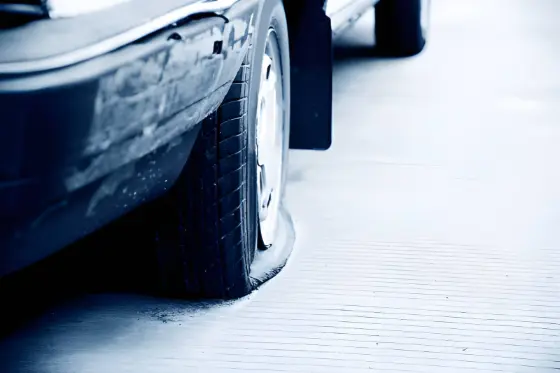
A blowout isn’t the same as a slow puncture. Where a puncture leaks air gradually over hours or days, a blowout is instant — the tyre wall fails, usually with a loud bang, and the car can feel like it’s been pulled sideways or the back end has stepped out.
Common causes we see on call-outs include:
- Underinflation — a tyre running well below its correct pressure flexes more than it should, builds up heat, and the sidewall eventually fails. This is the single most common cause we find.
- Old or worn tyres — sidewall rubber degrades with age even if the tread still looks fine, and a tyre over 6–10 years old is at much higher risk regardless of mileage.
- Sudden impacts — a deep pothole, kerb strike, or debris in the road can rupture a tyre instantly, especially on faster roads like the A45 or the M42.
- Overloading — a car carrying more weight than the tyres are rated for puts extra strain on the sidewalls, particularly on long motorway runs.
- Existing damage — a tyre that already has a small cut, bulge, or puncture repair failure can blow out later under load or heat, sometimes with no warning at all.
What To Do If Your Tyre Blows Out: Step-by-Step
This is the sequence we recommend, whether you’re on a quiet estate road or doing 70mph on the motorway.
- Grip the wheel with both hands. The car will likely pull hard to one side — resist the urge to yank the wheel back the other way.
- Do not brake hard. Sudden braking on a blown tyre can cause a loss of control. Instead, come off the accelerator and let the car slow naturally.
- Signal early and move across gradually. Once you’ve got the car settled, indicate and ease across to the hard shoulder, a layby, or the road’s edge — don’t dart across lanes.
- Pull as far away from traffic as possible. On a motorway, aim to get the car’s left wheels onto the verge beyond the hard shoulder line if you can.
- Put your hazard lights on immediately and keep them on the whole time you’re stopped.
- Get everyone out on the passenger side, away from traffic, and stand behind a barrier if there is one. This applies even on quieter roads — cars have been hit while stationary on the hard shoulder.
- Call for help — either a breakdown provider, roadside assistance, or a mobile tyre fitting service that comes to you.
What To Do After a Tyre Blowout on the Motorway
Motorway blowouts deserve their own mention because the stakes are higher and the advice is slightly different. If you’re on a smart motorway with no hard shoulder, do not stop in a live lane if it’s at all avoidable — try to reach the next emergency refuge area, which are spaced at regular intervals and marked with orange signs. If you genuinely cannot move the car, keep your seatbelt on, put hazards on, and dial 999 immediately rather than getting out, since a stationary vehicle in a live lane is extremely dangerous.
Once safely on a hard shoulder or refuge area:
- Exit from the left-hand doors only.
- Stand behind the barrier, well away from the carriageway.
- If you have one, a warning triangle should only be used on conventional roads with a hard shoulder — never place one on a live motorway lane.
- Call for tyre blowout roadside assistance rather than attempting to change the wheel yourself this close to fast-moving traffic. We’ve attended too many jobs where a driver was crouched at the roadside trying to fit a spare a few feet from live lanes — it’s not worth the risk for the time it saves.
Can You Drive After a Tyre Blowout?
No — you should not continue driving on a tyre that has blown out. A blown tyre has usually lost its structural integrity, meaning the wheel rim can be damaged by driving on it even a short distance, and steering and braking become unpredictable. If the spare or a repaired tyre is fitted and inflated correctly, and there’s no other visible damage, it’s fine to continue at moderate speed to a garage — but the damaged tyre itself should never be driven on once it’s blown.
A quick way to judge whether a tyre can go back into service after any tyre event:
| Situation | Safe to drive on? |
| Full sidewall blowout | No — needs replacing, not repairable |
| Tread punctured, sidewall undamaged | Sometimes repairable, get it assessed |
| Spare wheel correctly fitted and inflated | Yes, drive cautiously to a garage |
| Run-flat tyre after a blowout | No — treat the same as a standard blowout |
Common Mistakes We See
- Trying to “limp” to the next junction. Even a few hundred metres on a blown tyre can wreck the wheel rim and suspension components, turning a tyre job into a much bigger bill.
- Standing at the back of the car to assess the damage. This is one of the most common reasons roadside incidents turn serious — always get well clear of the carriageway first.
- Ignoring a tyre that “felt a bit soft” beforehand. In a good number of the blowouts we attend around Birmingham and Warwickshire, the driver mentions the tyre had felt low for a few days.
- Not carrying a torch or hi-vis vest. On darker rural roads around Worcestershire in particular, visibility to other drivers matters as much as your own safety at the roadside.
Cost of Dealing With a Tyre Blowout
Costs vary depending on the tyre size, brand, and whether any other damage occurred. As a rough local guide:
| Item | Typical Cost Range |
| Standard replacement tyre (budget–mid brand) | £60–£120 |
| Premium brand replacement tyre | £120–£220+ |
| Mobile call-out and fitting | Often included or a modest fixed fee |
| Wheel alignment check (recommended after a blowout) | £30–£60 |
| Alloy wheel repair (if rim damaged) | £80–£150+ |
A blown tyre itself is never repairable — sidewall damage from a blowout means the tyre must be replaced, not patched.
Prevention Tips and Maintenance
Most blowouts are avoidable with basic habits:
- Check tyre pressures monthly, and always before a long motorway trip — underinflation is the leading cause of blowouts we see.
- Inspect sidewalls for cracking, bulging, or cuts, particularly on tyres more than five years old.
- Don’t ignore a tyre that feels or looks slightly low — get it checked the same day.
- Avoid overloading the car beyond its rated capacity, especially on long journeys.
- Rotate tyres regularly so wear is even across the set.
- Replace tyres by age as well as tread depth — rubber perishes even with low mileage.
When to Call a Professional in Birmingham, Warwickshire and Worcestershire
Once you’re safely off the road, that’s the point to call in a professional rather than attempting a roadside wheel change yourself, particularly:
- On a motorway or dual carriageway, where changing a wheel yourself is genuinely dangerous.
- If there’s no usable spare, or it’s a space-saver not rated for the journey home.
- If you’re unsure whether the wheel rim, suspension, or brake line has been damaged.
- If it’s dark, raining, or you’re on a narrow country lane with limited visibility, common on some of the rural routes around Warwickshire and Worcestershire.
- If you simply don’t have the tools, confidence, or time to do it safely.
Why Choose Wizz Tyres in Birmingham, Warwickshire and Worcestershire
We’re a mobile tyre fitting service that comes to wherever you’ve broken down — motorway hard shoulder, layby, driveway, or workplace car park — across Birmingham, Warwickshire and Worcestershire. Our technicians are certified and insured, we typically arrive within 10–30 minutes of a call, and we carry a wide stock of tyre sizes and brands on the van, so most jobs are sorted on the spot without needing a tow to a garage. Whether it’s a full blowout replacement or an assessment of whether your tyre can be repaired, we’d rather talk you through it honestly than sell you something you don’t need.
Areas We Cover Near You
Alongside Birmingham, Warwickshire and Worcestershire, our mobile technicians regularly attend blowouts and tyre call-outs in the surrounding towns and suburbs, including:
- Solihull, Sutton Coldfield, and Halesowen (Birmingham area)
- Warwick, Leamington Spa, Rugby, Stratford-upon-Avon, Nuneaton, and Kenilworth (Warwickshire)
- Redditch, Bromsgrove, Kidderminster, Worcester, and Droitwich Spa (Worcestershire)
If you’re on a motorway or A-road running through any of these areas — including the M5, M6, M42, A45, and A46 corridors — our vans can usually reach you well within our normal response window.
Frequently Asked Questions
What should I do first if my tyre blows out while driving? Grip the wheel firmly, avoid braking hard, and gradually slow down before pulling off the road once it’s safe to do so.
Can you drive after a tyre blowout? No, you shouldn’t continue driving on the blown tyre itself, though it’s fine to drive cautiously on a correctly fitted spare.
What causes most tyre blowouts? Underinflation is the most common cause, followed by old tyres, sudden impacts like potholes, and overloading.
Is it safe to change a tyre on the motorway hard shoulder? It’s not recommended — call roadside assistance and wait well behind the barrier rather than attempting the change yourself.
How much does it cost to replace a blown tyre? Most replacements fall between £60 and £220 depending on tyre size and brand, plus any call-out fee.
Can a blown tyre be repaired instead of replaced? No, a full blowout causes sidewall damage that cannot be repaired and always requires a replacement tyre.
How quickly can a mobile tyre fitter reach me in Birmingham or Warwickshire? Most call-outs in our coverage area are attended within 10 to 30 minutes, depending on location and traffic.
Had a blowout or spotted a tyre that doesn’t look right? Get it checked properly before it becomes a roadside emergency — visit our puncture repair page to see if your tyre can be saved, or call us for fast mobile assistance wherever you are.